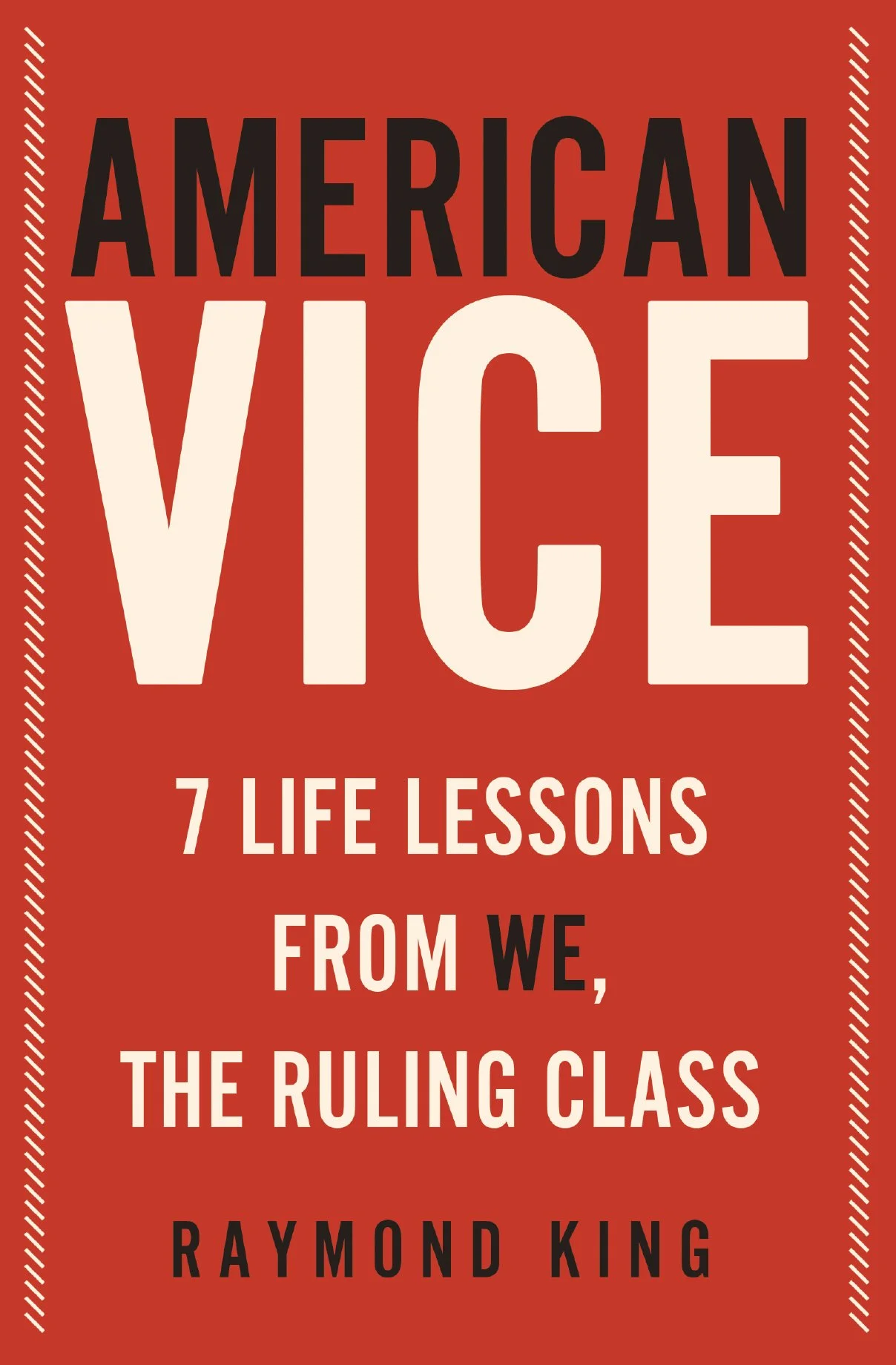
For the first time, the ruling class speaks for itself—one lesson at a time.
A must-read primer for all aspiring members of the ruling class.
We, the ruling class, have earned an unfairly bad reputation. Every time people get worked up over social problems, we are the first to be blamed. In truth, we’ve been profoundly misunderstood. All we want is to spread meritocracy around the world. And the idea that we’re all part of a shadowy cabal? Nonsense. We are your managers, your representatives, your thought leaders—everything standing between you and freedom.
With the world drifting ever closer to the brink, we’ve been thinking a great deal about our legacy. So, for the first time, we have decided to put in writing the core tenets behind our unimaginable success:
1. On Leadership: Always Reserve the Possibility of Change
2. On Language: Appeal to Empathy and Say Nothing
3. On Ideology: Never Believe Anything, Always Convey Conviction
4. On Hypocrisy: Embrace Contradictions as a Life Philosophy
5. On Success: Fashion Yourself as a Challenger to Conventional Wisdom
6. On Hardship: Overcome Opposition by Marketing Adversity
7. On Freedom: Give People the Feeling of Autonomy; They Will Give You the World
One day, we hope this book will be required reading in every classroom. Until then, use our wisdom to rise and thrive in the wonderful dystopia we created for you.
-
“We romanticize the idea of leadership to prevent the masses from achieving actual self-determination.”
—1.5
“Power is the ability to occupy and influence people’s imagination.”
—1.9
“When you think about it, great leadership is about creating the feeling of nostalgia. You want people to crave something they cannot fully get. Be it a goal, a mission, a lifestyle, a noble ideal. Moreover, you want your presence to feel like home.”
—1.11 -
“The masses use language to explain and self-justify. The ruling class uses language to influence perception.”
—2.5
“You could say that the entire responsibility of the ruling class is to continuously produce in the masses the feeling of being seen and heard… What matters is not the surface expression—what matters is how well we can bring deeper pain and need to the surface. By performing this act, we become authentic.”
—2.8
“Summarizing reality provides you the opportunity to influence perception while appearing impartial. Explaining reality makes you appear defensive and weak.”
—2.10
“We induce psychosis in the masses, then we rescue them from going insane. Then we start the cycle all over again. We will never get tired of doing this. We are nothing if not persistent. Our goal was never to help people manifest their dreams. Our goal was never to help people reach their full potential, whatever that even means. Our goal, from the start, was to stoke envy and fear. When you keep empathizing with other people without solving their problems, what do you think is going to happen?”
—2.17 -
“If the ruling class had an essential command, it would be to replace all meaning with ideology.”
—3.6
“Ideology is exhausting by design. Thought leadership, “new” theories about happiness and success, the endless need for therapy, and political campaigns promising to change everything without changing anything—these are just some of the products we sell under the brand of ideology.”
—3.10
“So you see, people in power have no ideology. We may claim to believe this or that, and we certainly do a good job of making people feel that we have genuine convictions, but we don’t really believe in anything.”
—3.14
“All ideologies teach their followers a kind of performative humility with which to understand suffering in their lives.”
—3.16 -
“What’s the difference between a leader and a liar? A liar lies out of compulsion. A leader lies to lead. We say life is unfair precisely because we understand this subtle but important distinction.”
—4.4
“Yes, we, the ruling class, have the right to exist. Never forget this simple fact. We have the right to ask the masses to nourish our ego. We have the right to ask for compliance even when we are breaking rules. We can perform innocence while being totally corrupt. We can decry autocracy while crushing the working class. These are essential contradictions you must learn to embody if you want to earn the right to exist.”
—4.7 -
“Once you can make a living talking about success rather than actively achieving it, you have reached the pinnacle of success.”
—5.1
“Contrary to conventional wisdom, you should never focus on how people feel toward you. Instead, focus on understanding how people feel about themselves.”
—5.5 -
“Once we mythologize the journey, all sorts of hardships can be justified. This is why our leaders impress upon young people the importance of “hard work.” At first, hard work feels pedantic and painful. Over time, reinforced by competition, we begin to mythologize hard work to mean adventure. How else can the human mind cope with meaningless toil? We’re afraid of asking too many questions because the real answer will never satisfy our need for meaning. It may well be better to live inside a pervasive but hopeful fear than to find out that nothing matters in the end.”
—6.5
“The more unattainable a goal is, the more conflicts will be created. The more conflicts there are, the more people will compete against each other rather than disputing the goal. When people compete against each other, they find new reasons to be unhappy about themselves. Unhappiness leads to more work, and more work restores credibility to ruling power.”
—6.8
“It is our relationship to pain that allows us to understand our place in the world.”
—6.17 -
“The illusion of control reduces rational actors into beasts of burden.”
—7.2
“When people feel a sense of autonomy, the world becomes easier to understand. I act, therefore I am.”
—7.8
“When we seek refuge in being busy, we become happy slaves.”
—7.11